Advanced Settings
INFO
Important: If you are unsure about any of these settings, please consult your installer or technical support before making changes, to ensure the parameters match your hardware connections and energy service agreement.
Basic Settings
By selecting the appropriate mode and control logic, you can ensure the system receives the most stable and efficient control support across different application scenarios.
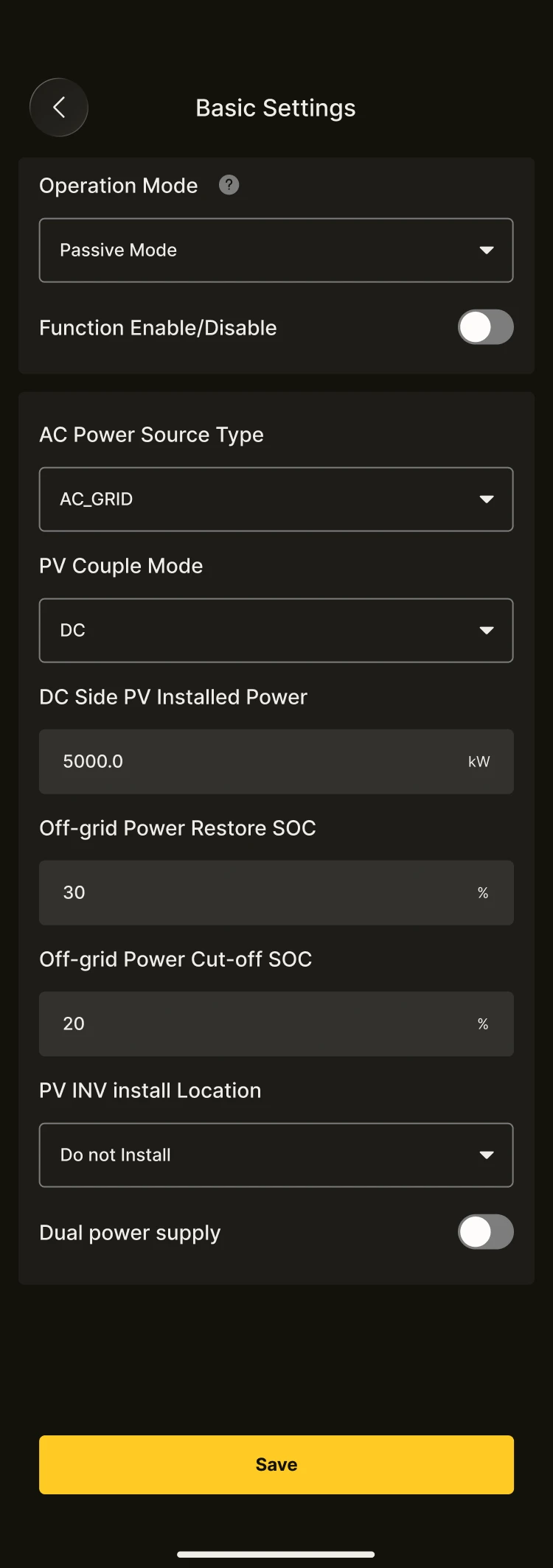
Differences between start-up modes
- Passive Mode: Local intelligent management, with the system centrally scheduled by the local EMS. Once the parameters are configured, the energy storage equipment will strictly execute the preset control strategy, running automatically throughout without any real-time manual intervention.
- Third-Party Scheduling Mode: The system connects to and accepts centralised scheduling from a third-party platform. In this mode, to avoid conflicting commands, the system streamlines local strategies and retains only core safety and protection parameters such as tariff settings, backup reserve and export limitation, ensuring scheduling commands are executed efficiently.
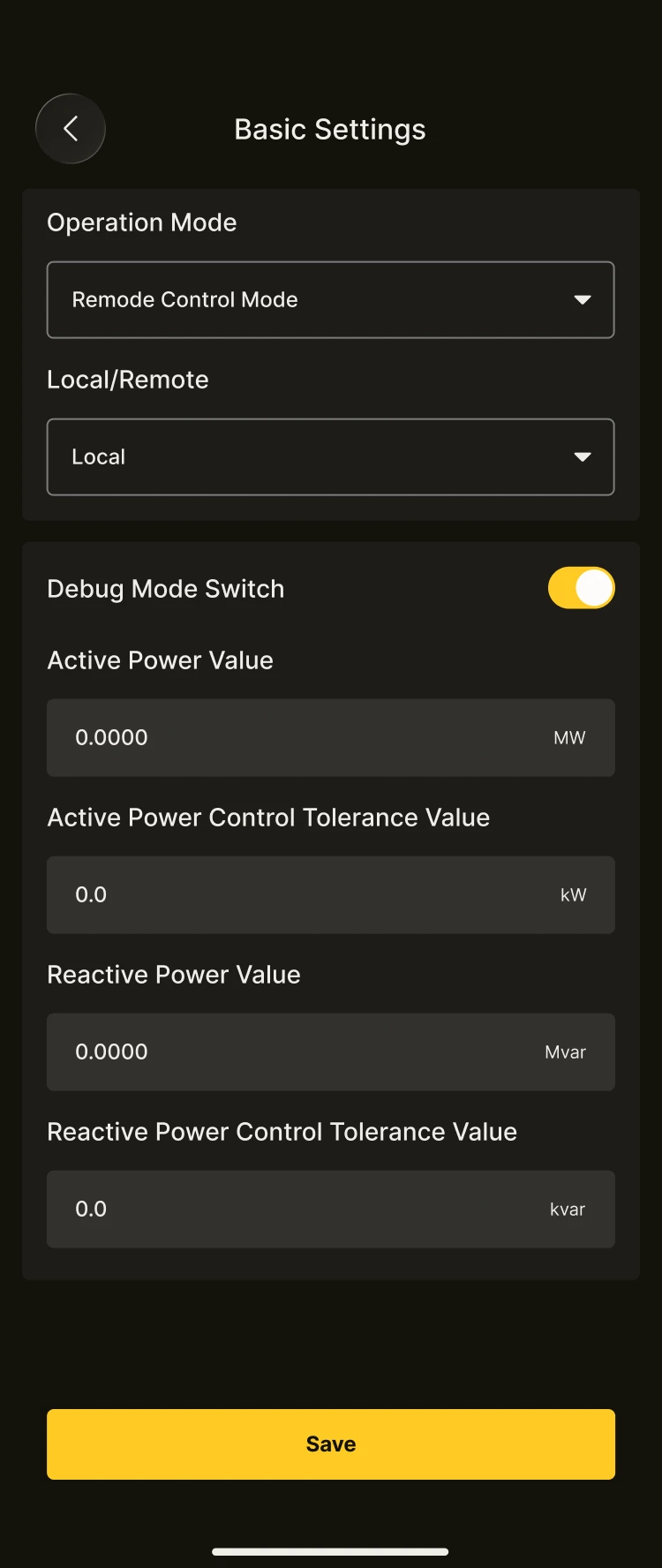
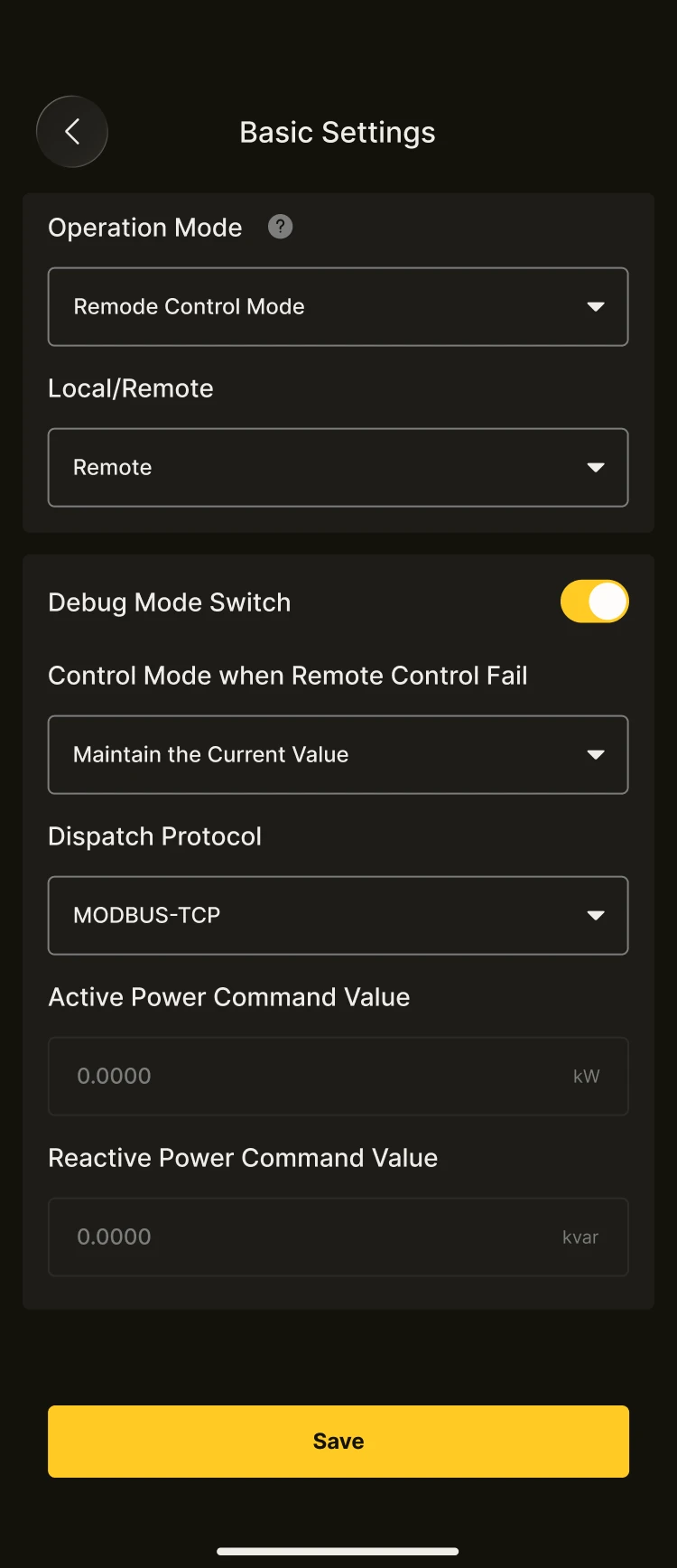
Control strategy
- Local Mode: Set power parameters directly via the cloud platform or the device's local web page. This mode is designed specifically for the installation and commissioning stage, allowing technicians to carry out rapid configuration and functional verification on site.
- Remote Mode: The system establishes a long-term connection through the EMS physical communication interface. In this mode, the management end can issue control commands remotely, achieving precise control and energy scheduling of the equipment across time and location.
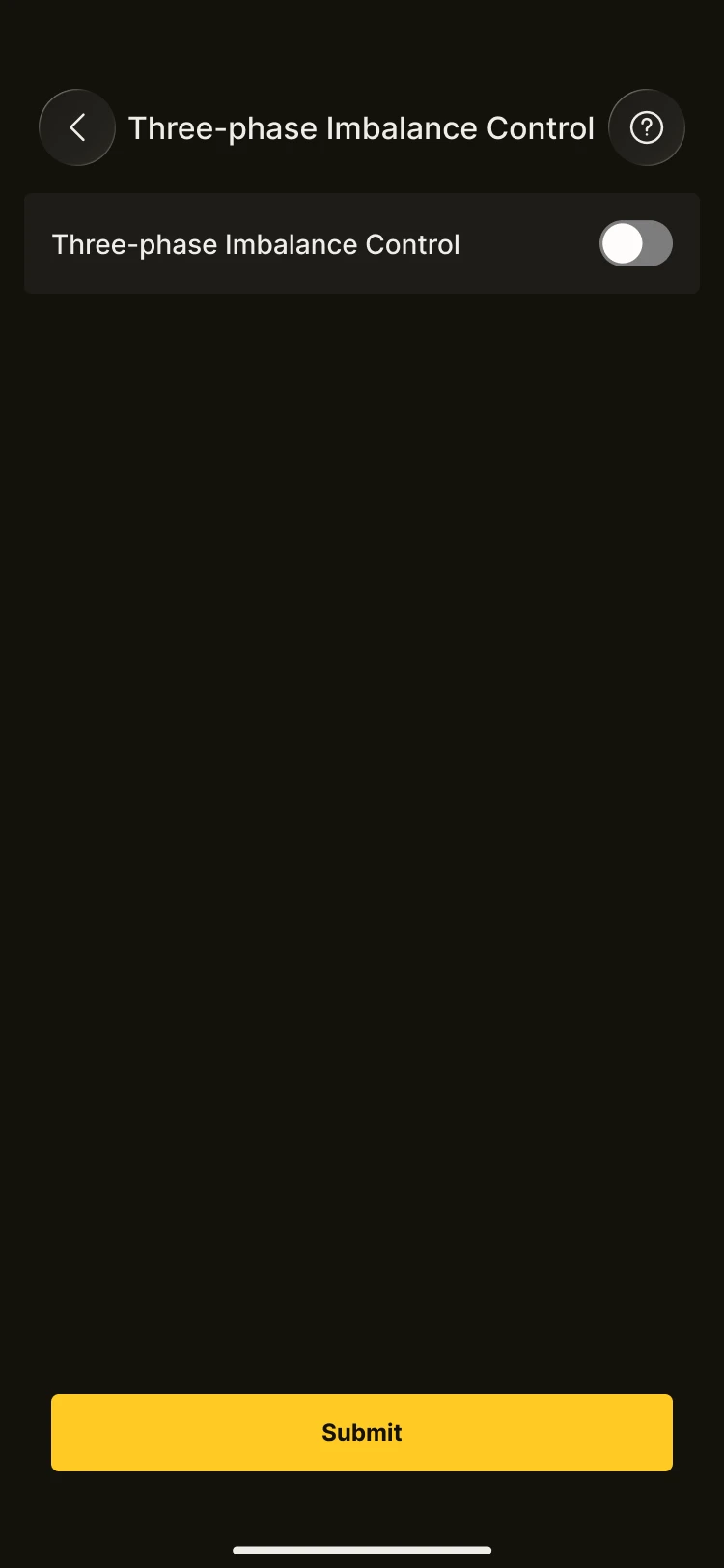
Three-Phase Imbalance Control
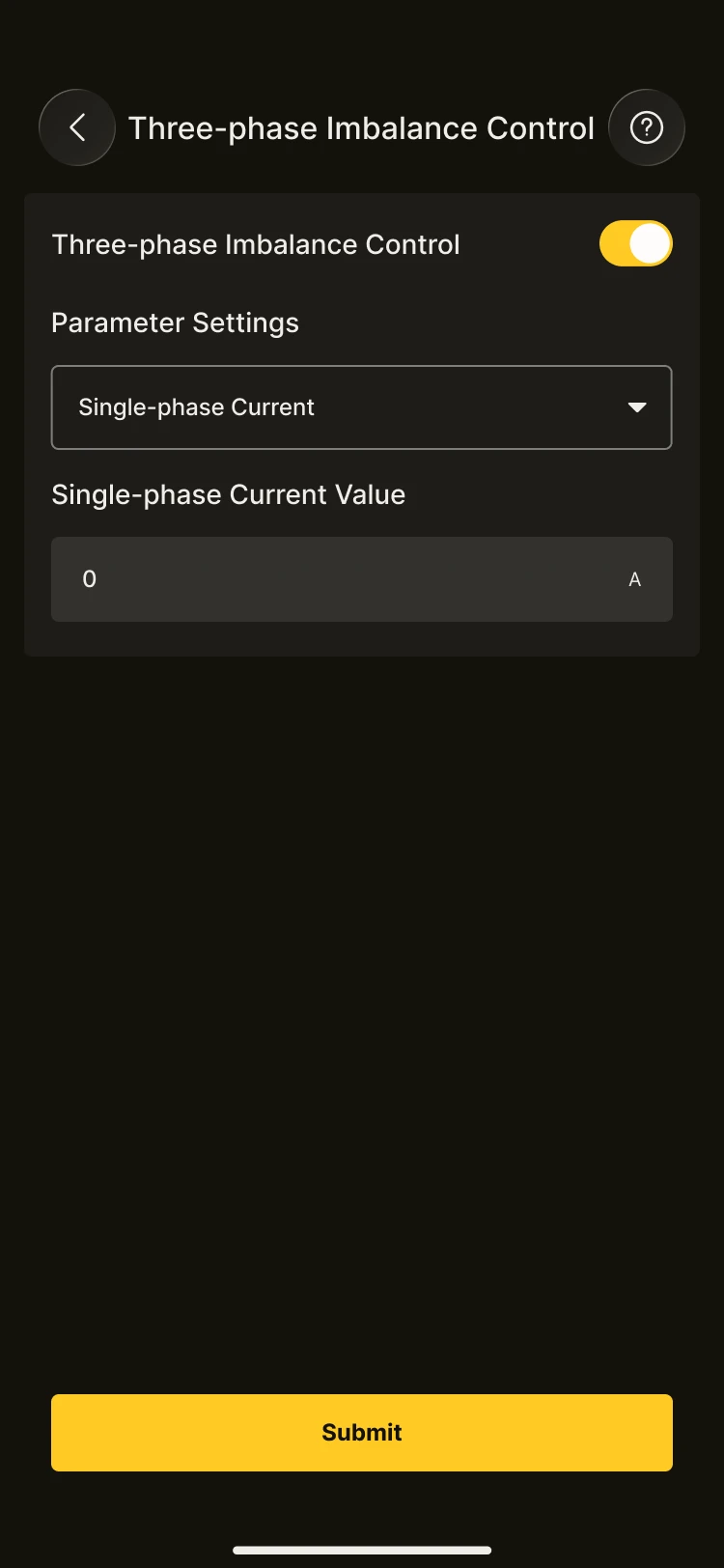
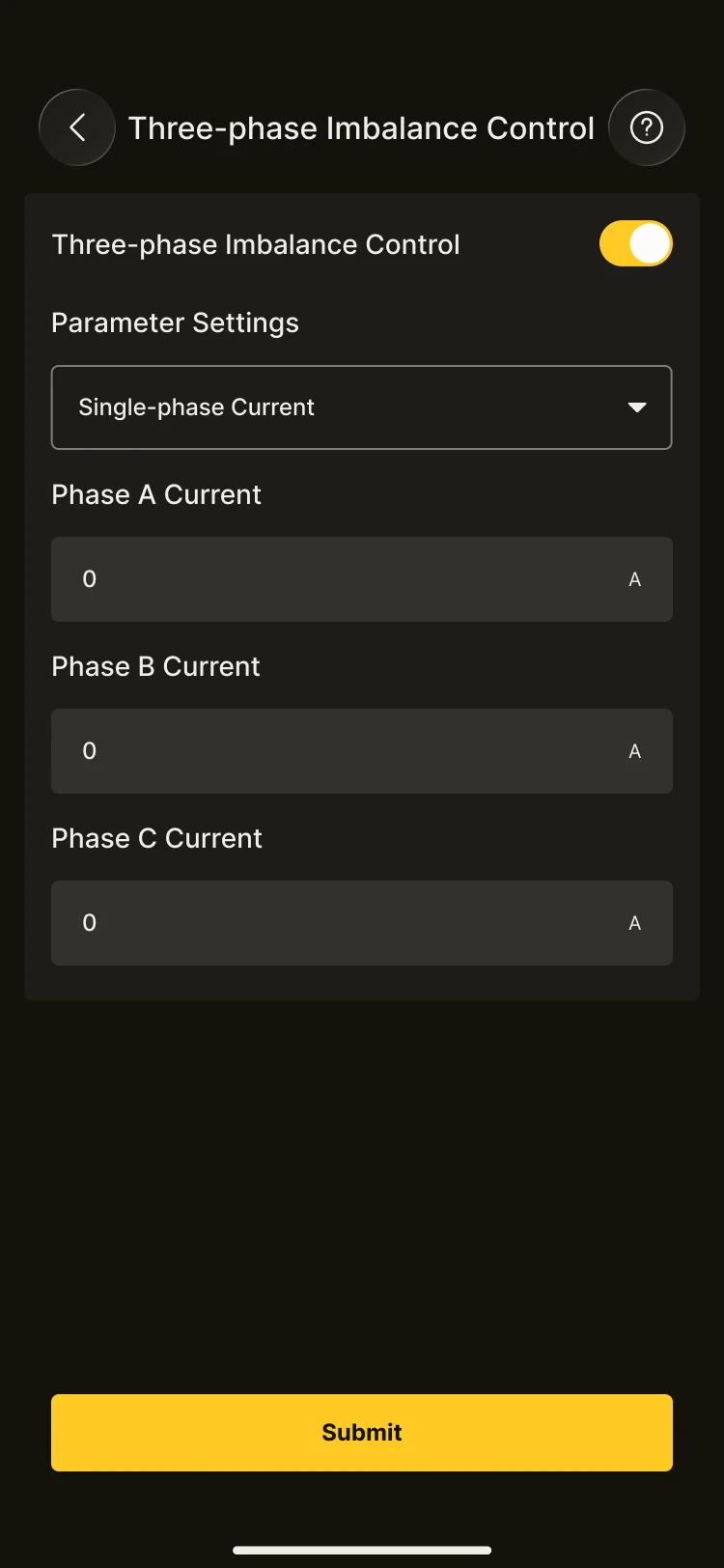
This is a power balancing tool designed for complex electricity usage environments. Where three-phase loads are unevenly distributed, three-phase imbalance control intelligently regulates the single-phase output of the PCS, ensuring the current and power at the grid connection point always remain safely balanced and preventing system risks caused by single-phase overload.
How the system operates
- Single-phase regulation: Based on the limits you set, the system regulates the current or power of each phase independently and precisely, minimising the differences between phases as far as possible.
- Simultaneous charge and discharge: Whilst maintaining three-phase power balance, the system strictly follows the principle of simultaneous charging and discharging, ensuring the consistency and reliability of energy storage system operation.
- Intelligent monitoring: The load status of each phase is monitored in real time, and all regulation is completed automatically in the background without affecting your normal electricity use or production activities.
Safeguarding your electricity supply
- Eliminating overload hazards: Effectively mitigates the risk of tripping or equipment damage caused by excessive load on a single phase, keeping the power system robust over the long term.
- Improving power quality: By automatically balancing the three-phase currents, it optimises performance at the grid connection point and improves overall energy efficiency.
- Fully automatic protection: No need to monitor load changes manually in real time — the system responds immediately, saving you tedious on-site inspections and manual adjustments.
INFO
Note: Once this function is enabled, the system will operate according to the single-phase current or power limits you have set. We recommend completing the initial limit settings under the guidance of your installer.
Demand Control
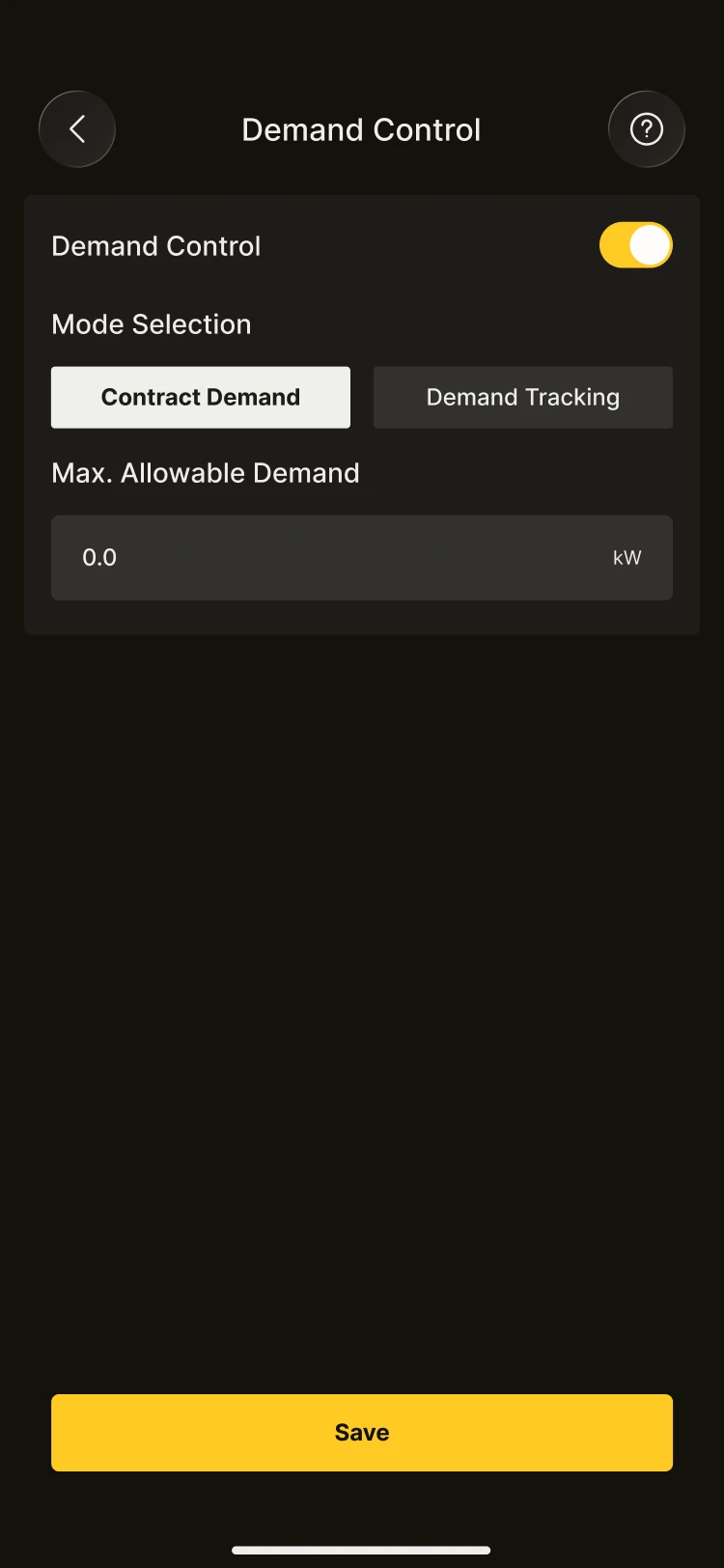
This is an intelligent monitoring tool designed specifically to reduce your electricity costs. Where billing is based on "peak power (demand)", demand control acts like an electricity monitor on standby 24/7, tracking grid connection point power in real time and strictly preventing consumption from exceeding limits.
How it helps you avoid excess charges
- Real-time monitoring: The system monitors total incoming power around the clock. As soon as consumption approaches the preset "maximum permitted demand", the regulation mechanism is triggered instantly.
- Multi-source complementarity: The system gives priority to discharging the storage battery and makes full use of PV output. By reducing the amount of energy drawn from the grid, it smooths momentary consumption peaks and ensures grid connection point power does not exceed the limit.
- Seamless control: The system adjusts automatically according to actual demand, with no need for frequent manual intervention, achieving optimal energy efficiency without disrupting normal daily life or production.
INFO
Tip: To achieve the best cost control results, please set the "maximum permitted demand" parameter accurately according to your electricity contract.
Export Limitation Control
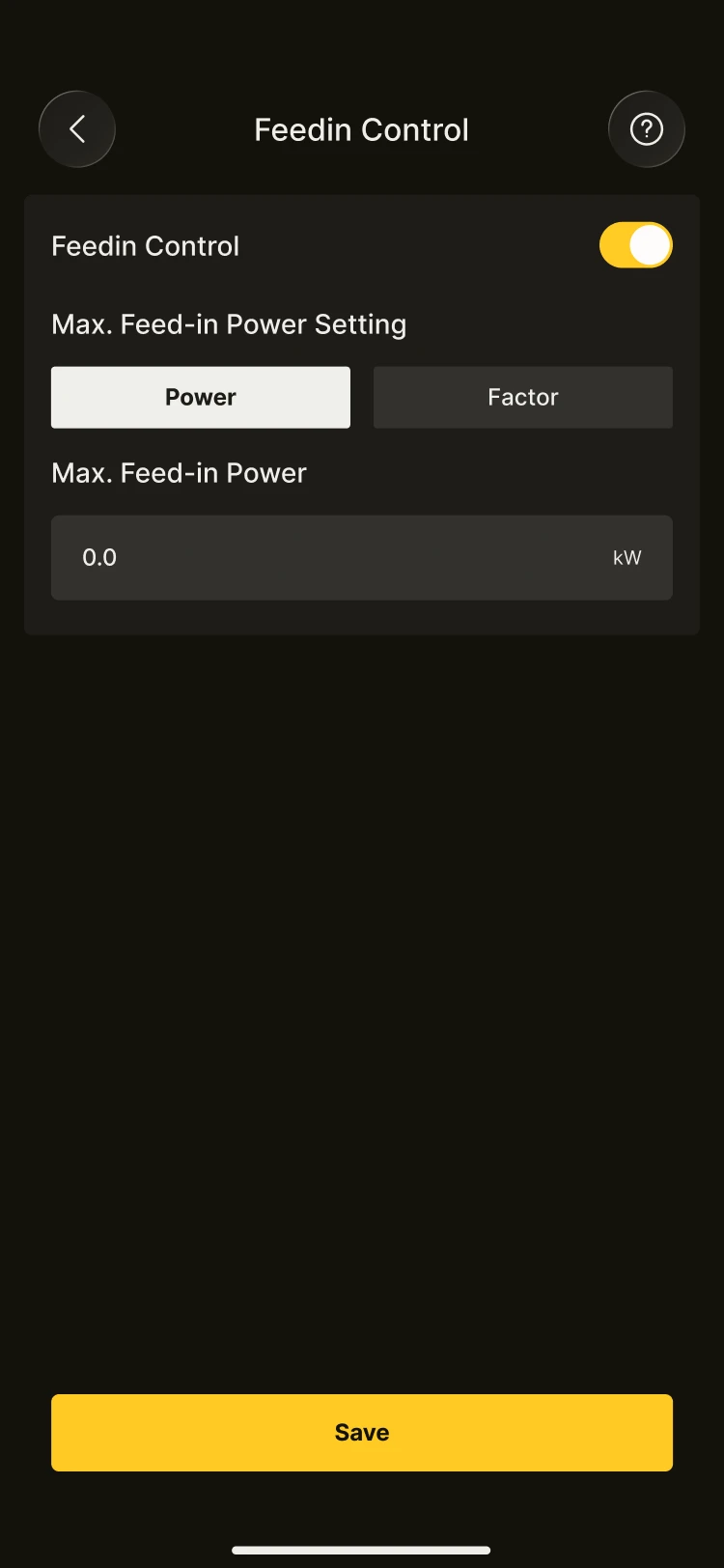
When PV generation and battery discharge are plentiful, export limitation ensures surplus energy does not flow back into the grid in breach of regulations. By adjusting system output in real time, it keeps your plant operating within the limits permitted by policy, effectively avoiding the risk of grid connection violations.
Round-the-clock avoidance of feed-in risk
- Strict feed-in control: The system constantly watches the grid connection point power. As soon as the combined PV and storage power exceeds on-site load demand, the protection mechanism is activated immediately.
- Rapid response: The system adjusts automatically according to real-time trends: first reducing battery discharge or switching to charging, and where necessary precisely limiting PV output, to ensure grid connection point power stays within limits.
- Intelligent valley filling: A customisable maximum feed-in power is supported. By setting a positive value, you can even achieve a "valley filling" effect, giving your plant greater operational flexibility.
Off-Grid Operation
In the extreme event of losing the external grid, the energy storage system uses PV-storage-generator coordination and load prioritisation to maximise the duration of the power supply, ensuring core production and daily life are unaffected.
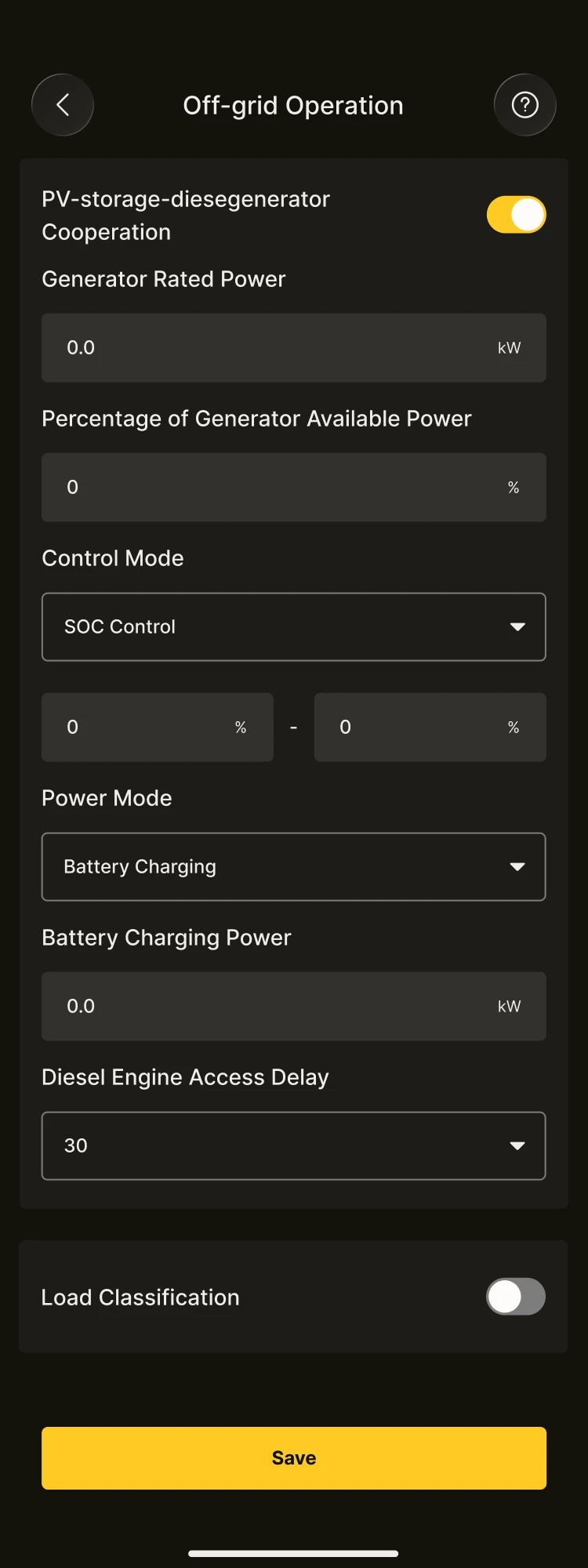
PV-storage-generator coordination
The system automatically balances the operation of PV, battery and diesel generator, pursuing lower fuel consumption whilst safeguarding the power supply.
- Fully automatic coordinated supply: The system schedules PV and battery output in real time. The diesel generator starts automatically only when the battery level is insufficient or specific time conditions are met, giving a seamless transition.
- Intelligent start/stop: The diesel generator is controlled precisely according to battery SOC or preset time periods. This avoids prolonged inefficient generator operation, substantially reducing fuel costs and equipment wear.
- Environmentally led strategy: Clean PV energy is used to the fullest extent, reducing reliance on fuel and making off-grid power both economical and environmentally friendly.
Load prioritisation
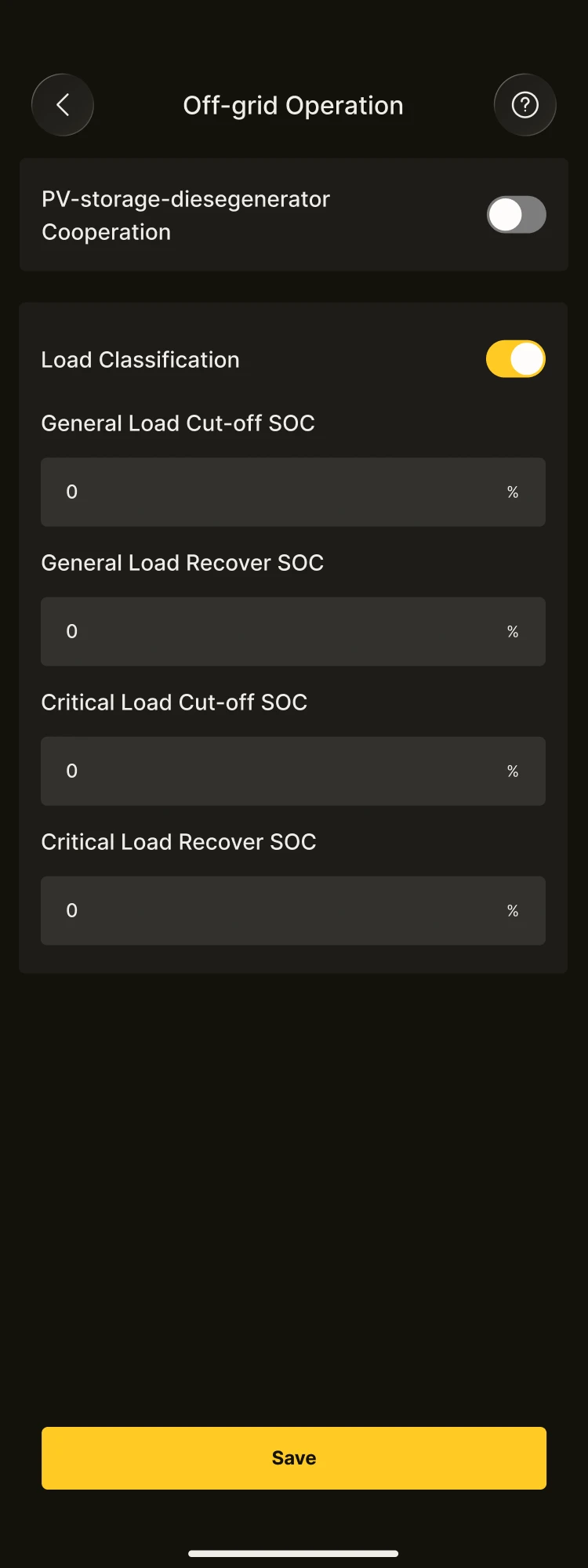
When off-grid energy is limited, the system prioritises critical loads according to the battery level (SoC).
- Tiered priority management: When the battery level becomes critical, the system follows the principle of "shed the non-essential first, protect the essential last". Once the battery level recovers, supply is restored step by step in order of "core loads first".
- Excellent endurance: By shedding secondary loads in an orderly manner, the operating time of critical equipment is extended many times over, effectively avoiding losses caused by a sudden site-wide power outage.
- Fully automatic tiered control: Built-in rigorous numerical logic (following: non-essential load restoration SOC > critical load restoration SOC > critical load shedding SOC) removes the need to switch circuits in and out manually.
INFO
Tip: To ensure load prioritisation works correctly, please contact your installer to confirm that the hardware wiring has been physically divided into "critical/non-essential" load groups.
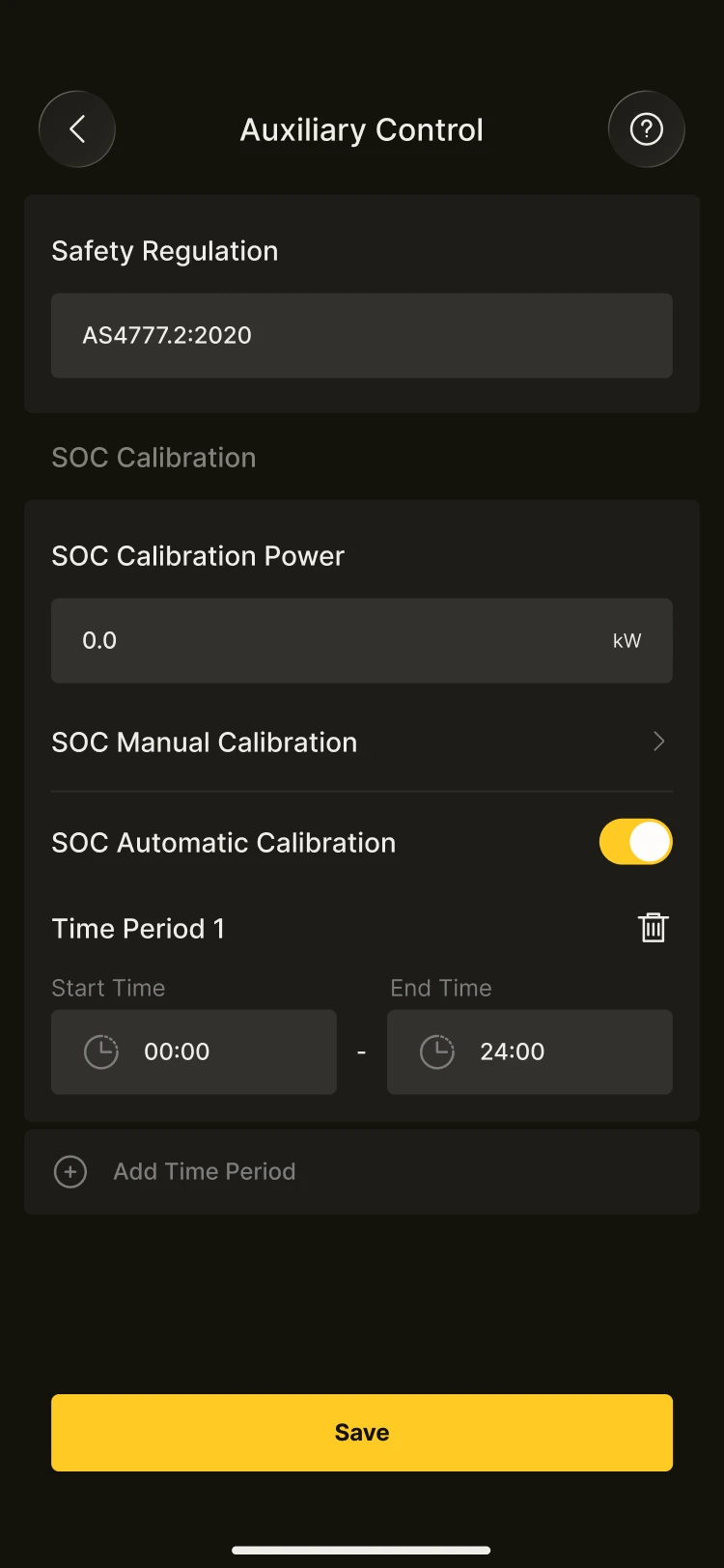
Auxiliary Control – SOC Calibration
Accurate battery level data is the foundation of intelligent energy management. SOC calibration eliminates the small deviations that build up over long-term operation by performing one complete controlled charge. It is rather like the system "refocusing" itself, keeping the battery level displayed consistent with the true state.
Why is calibration needed?
- Restoring accuracy: Eliminates the error between the displayed and actual battery level, avoiding "phantom charge" or sudden jumps in the reading, so you have a true picture of your energy reserves.
- Strategy baseline: Whether for backup reserve or demand control, an accurate SOC is the baseline for executing every intelligent strategy, ensuring system commands are followed precisely.
- Long-term robustness: Regular calibration effectively reduces false triggering of protection mechanisms and improves the expected performance of the energy storage system, making management more predictable.
If you find the battery level reading has not changed for a long time or does not match expectations, running this function can quickly restore the system's sensing accuracy.