

Profit
Learn more:
- Viewing profit over different periods
- Self-consumption rate and renewable achievement
- Energy profit
- Utility tariff plan
WARNING
Note: Profit figures are estimates, intended to help you understand trends and make comparisons. Your electricity provider's bill is the final authority.
Viewing profit over different periods
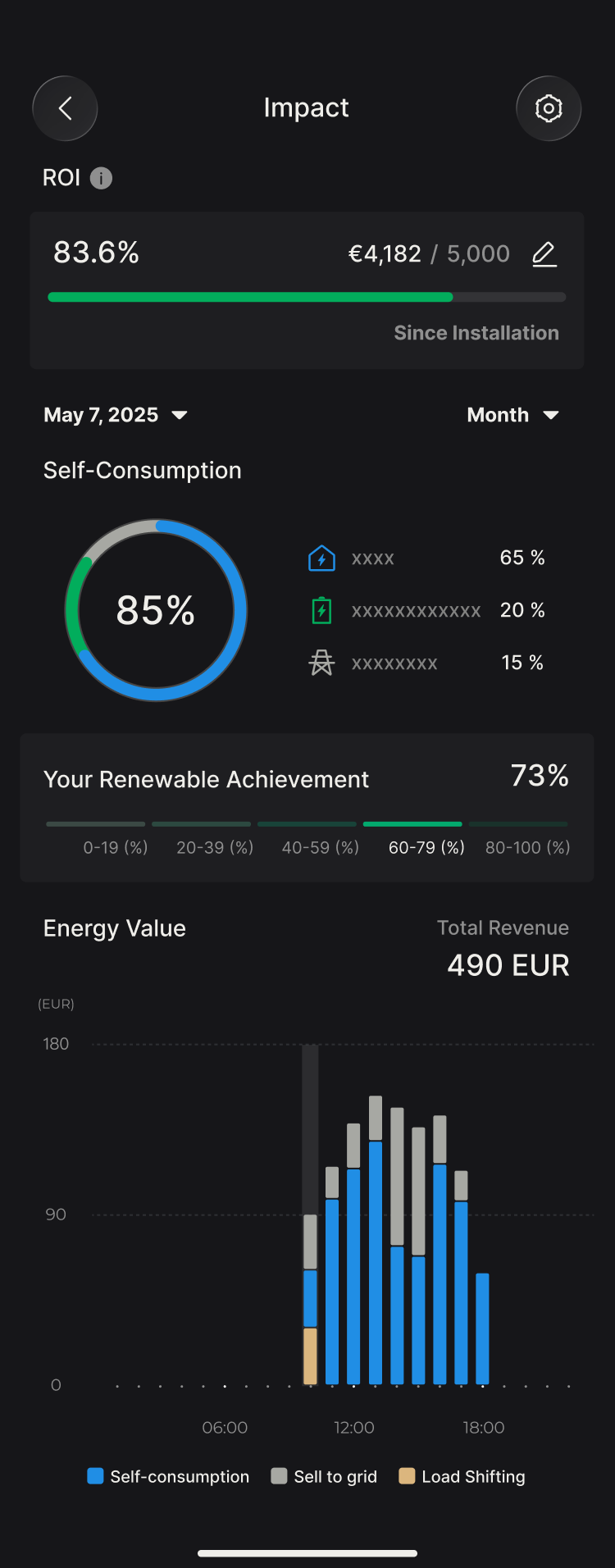
Using the time selector at the top of the page, you can view your profit performance across different time frames:
- Day / Month / Year: view the profit for a specific date, month or year
- All: view the cumulative profit since the system was installed (no date selector is shown in this mode)
Once you select a time range, all data and charts on the page update accordingly.
Self-consumption rate and renewable achievement
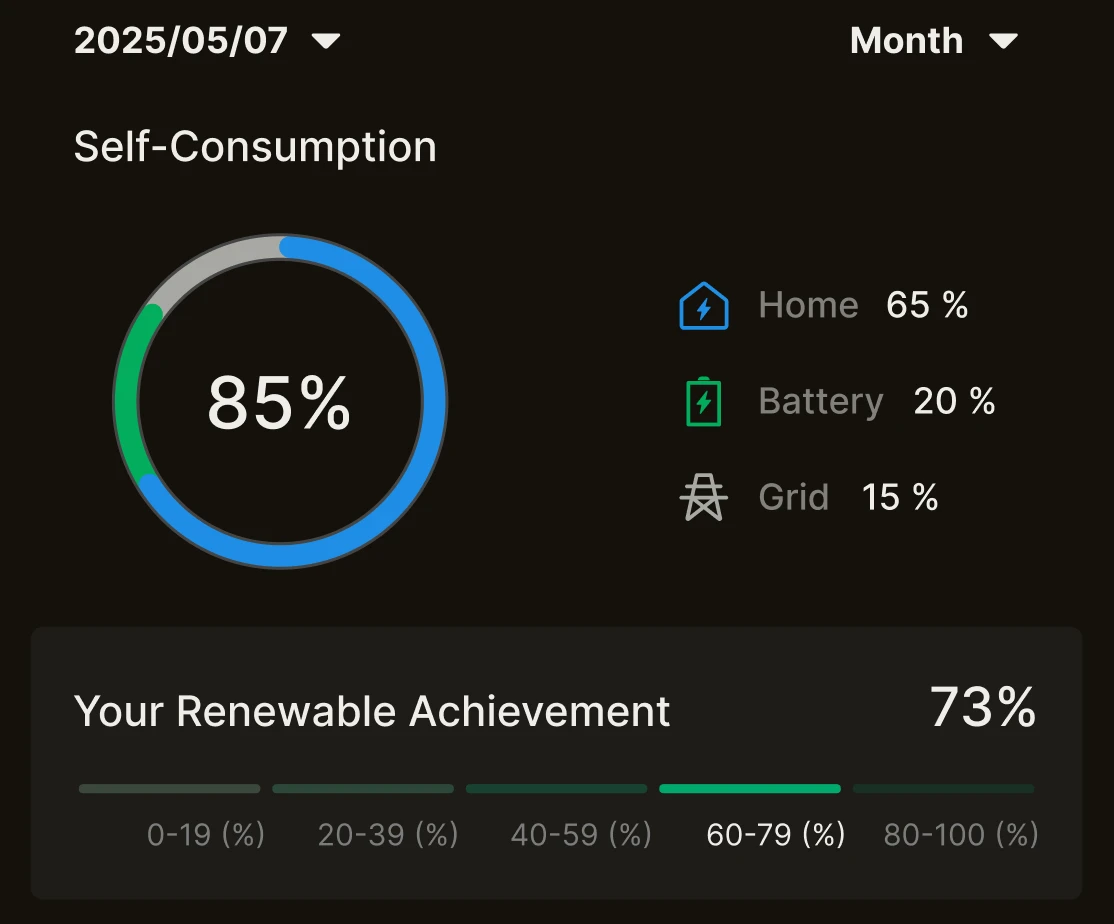
Self-consumption rate: On the Profit page you will see the self-consumption rate card, which gives you a clear picture of where your PV energy goes
- The ring chart shows the self-consumption rate for the selected time range
- It clearly distinguishes where PV generation flows:
- Household load
- Battery storage
- Feed-in to the grid
This helps you judge how much of the energy you generate you actually use yourself.
Renewable energy achievement: The same card also shows your renewable energy achievement
- It reflects the proportion of your household consumption that came from renewable sources or the battery within the selected time frame
- It helps you see at a glance how green energy contributes to your energy independence and everyday life
Energy profit
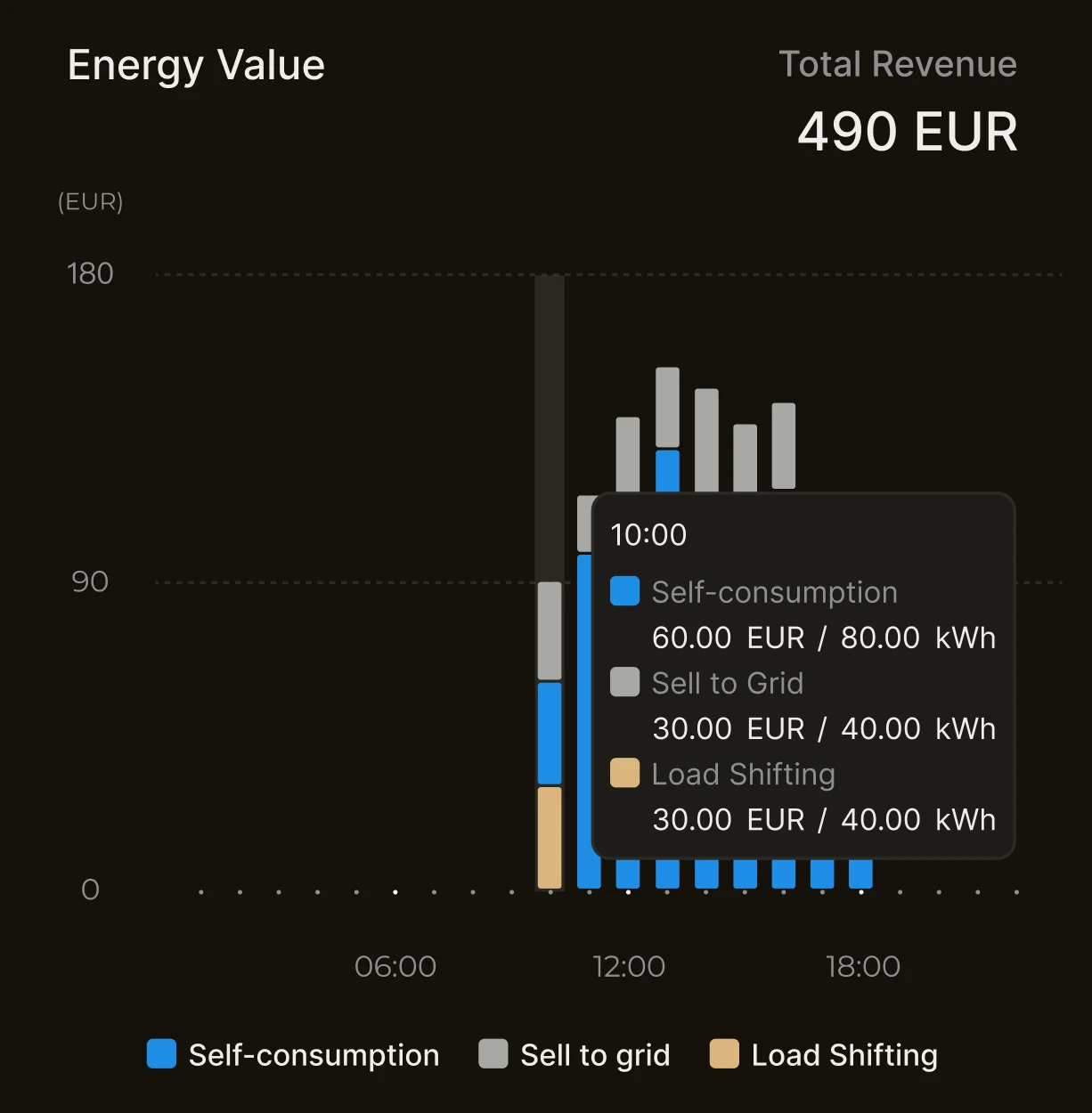
This shows the estimated profit for the selected time range, made up of three parts:
- Self-consumption profit
- PV energy used directly by the household or stored in the battery
- Savings calculated using the import price for the corresponding period
- Feed-in profit
- Surplus energy sold to the grid
- Profit calculated using the export price for the corresponding period
- Off-peak-to-peak profit
- Charging the battery from the grid during off-peak price periods and discharging it to supply the household during peak periods
- Savings calculated as the peak-period import price minus the off-peak charging cost
INFO
The system performs these calculations automatically — no manual input is required. Please note:
- Profit calculations are based on the tariff plan you have configured
- If profit figures look wrong or are missing, first check that your Utility tariff plan is complete (tap the gear icon in the top right) and that your equipment is online
Utility tariff plan
Profit calculations depend on the import price and export price you enter. You can usually find these prices on your electricity bill. Once you are in the system, follow the prompts to complete your tariff plan so that profit calculations match your actual situation. The utility tariff plan currently supports three pricing models:
- Fixed tariff
- Time-of-use tariff
- Dynamic tariff (day-ahead price data sourced from ENTSO-E)
INFO
Dynamic tariffs are already supported in Germany, the Netherlands, Belgium, Poland and several other European countries / regions, with more being added continually
Setting up your tariff plan
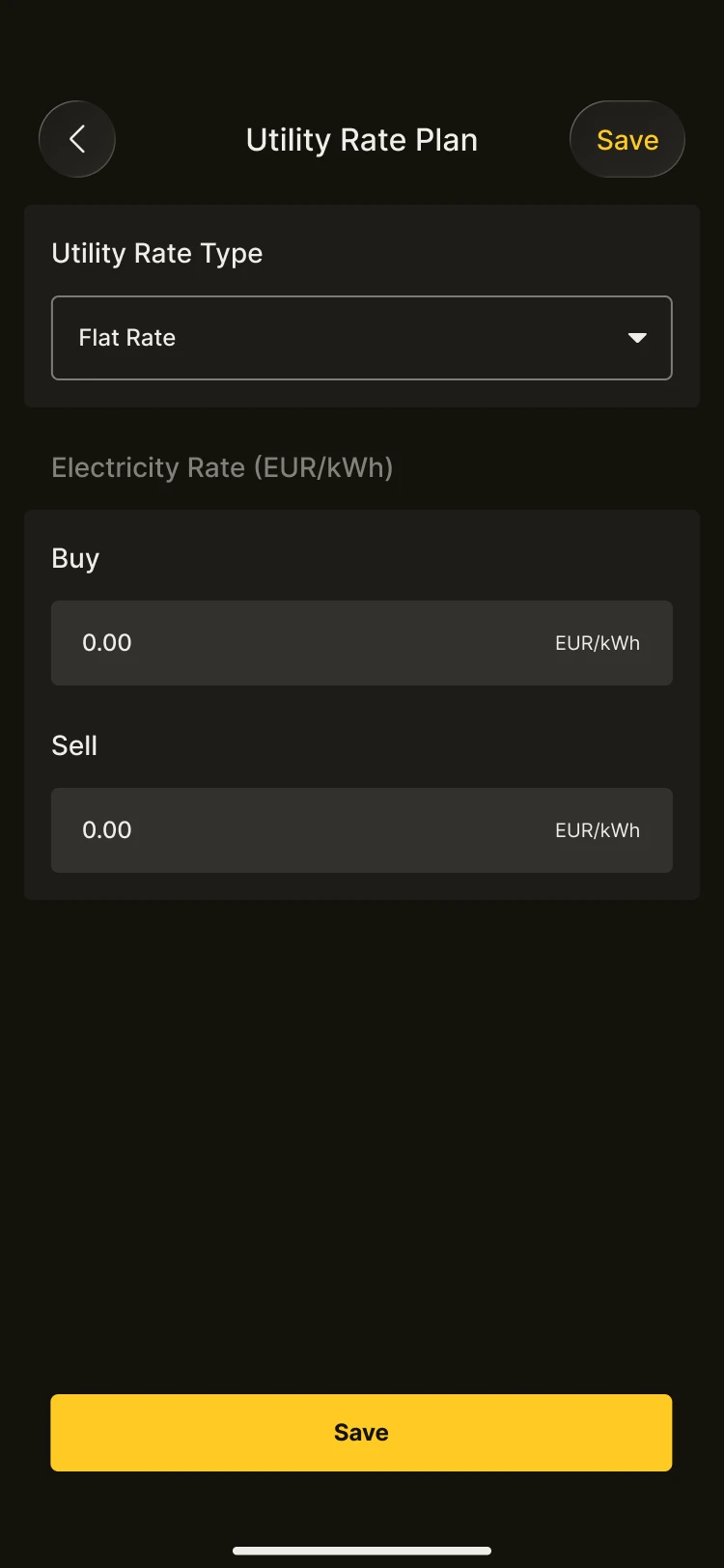
1. Setting a fixed tariff
- A fixed tariff suits regions where the price is the same throughout the day.
- Where to find it: select "Fixed" mode
- You need to enter:
- Import price
- Export price
- The system uses this single price to calculate profit for the whole day; no further configuration is needed.
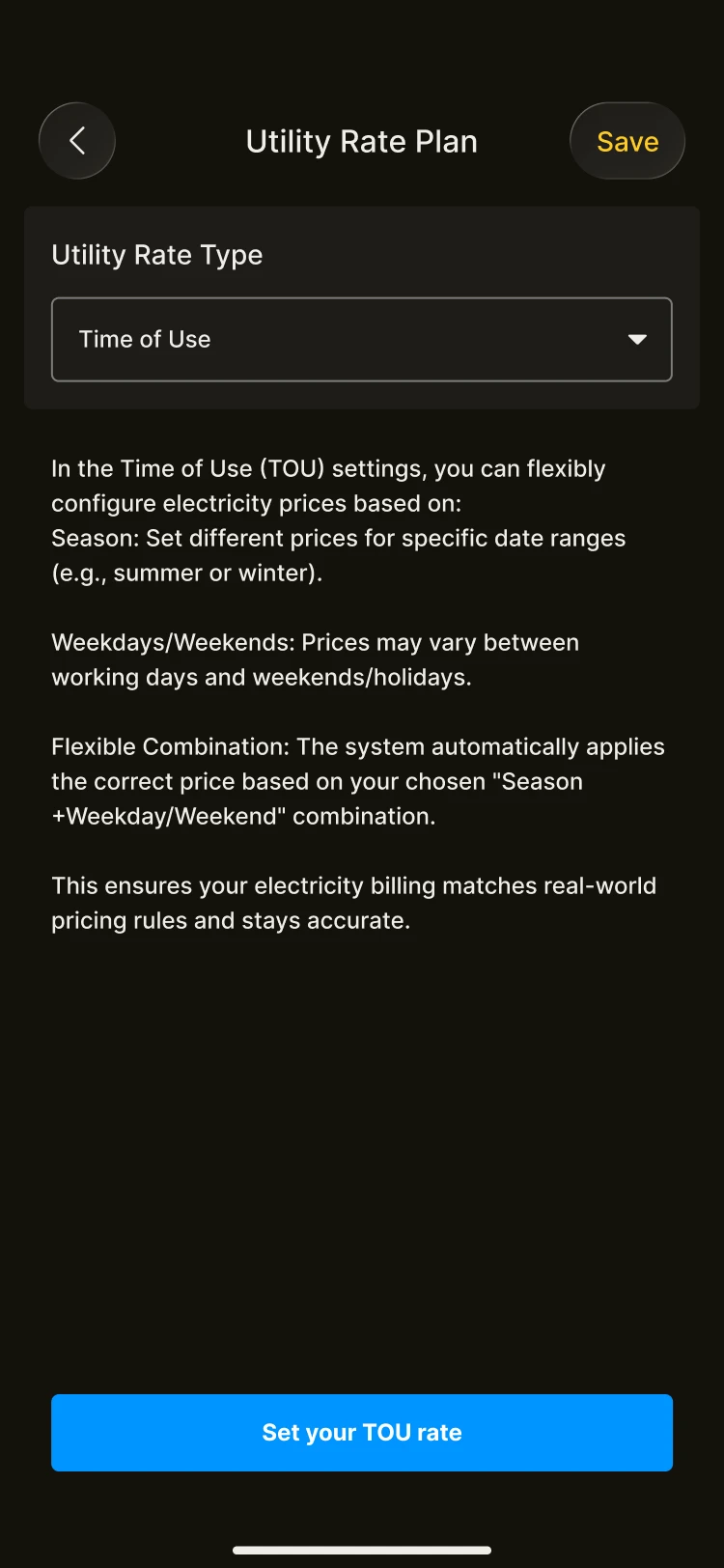
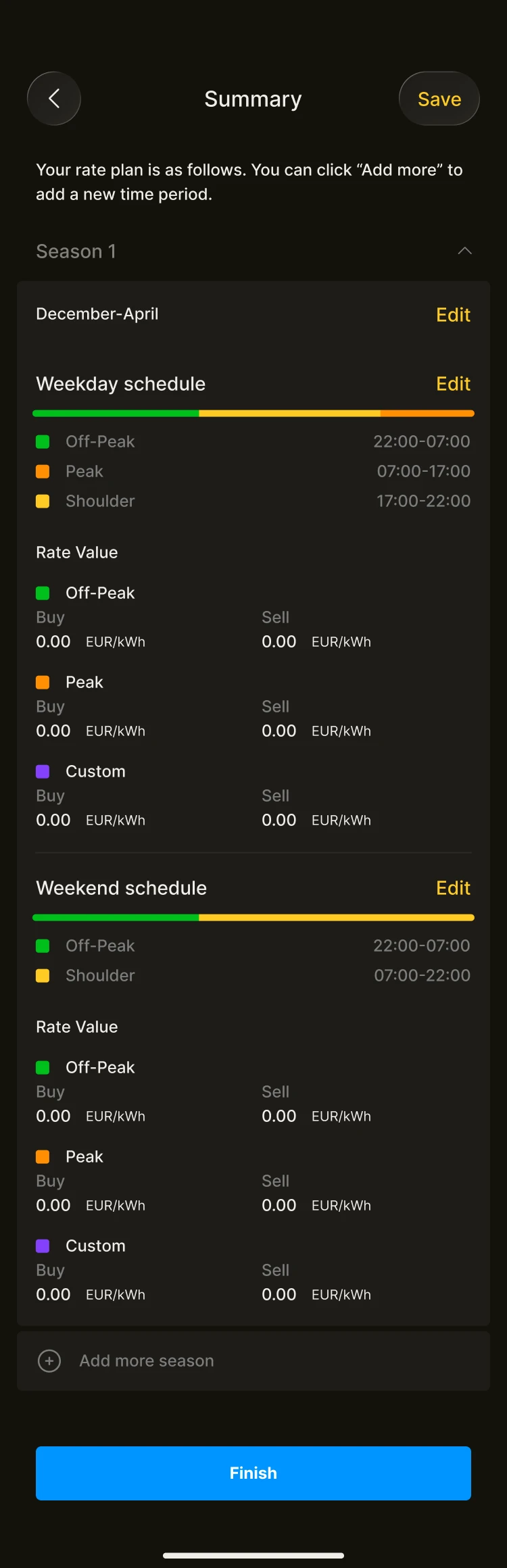
2. Setting a time-of-use tariff (TOU)
- Suitable for regions where the price varies by season / weekday / time period.
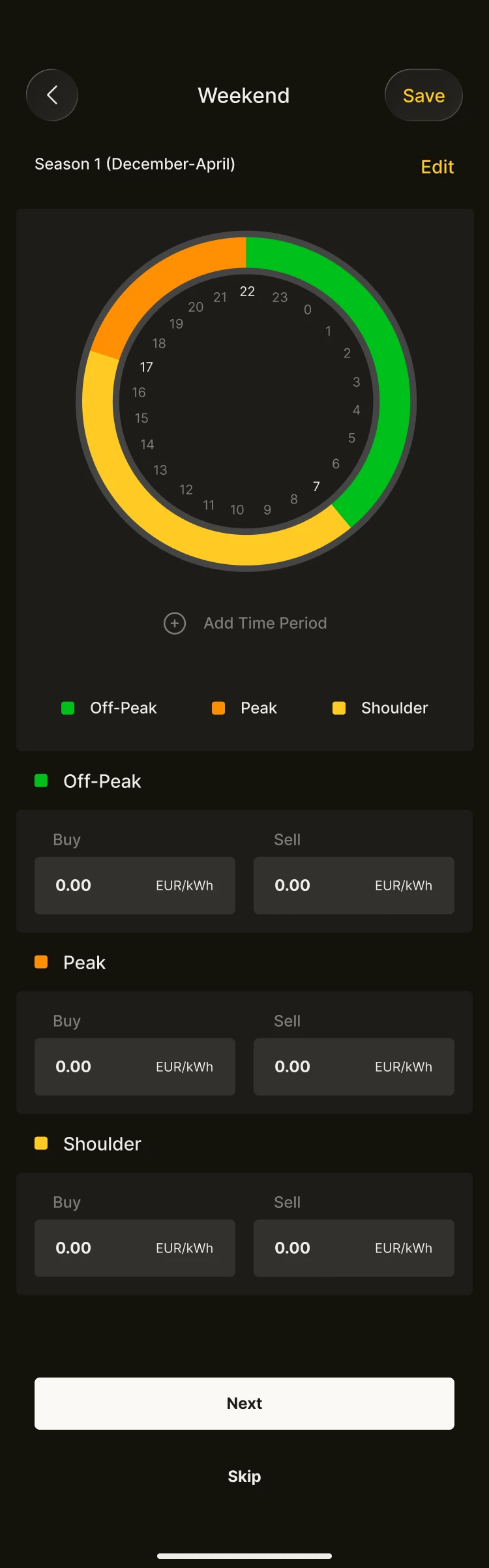
- A time-of-use tariff has two parts:
- Time periods: describing when the price changes
- Price types: describing the price level for that period, including super-peak, peak, standard, off-peak, super-off-peak and custom types
- Setting up a time-of-use tariff
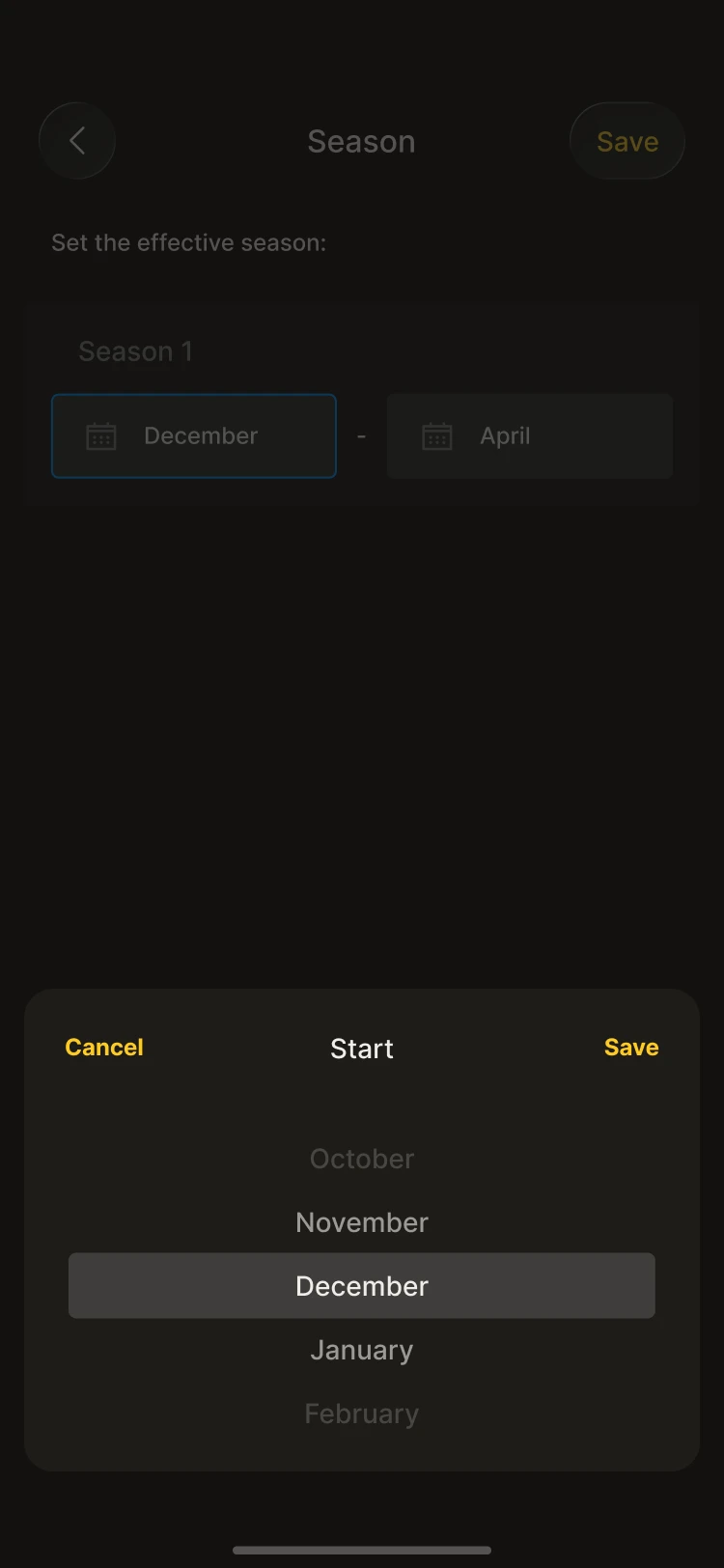
- Select the time factors
- Season: create multiple seasons using a "start date – end date"; the months of different seasons must not overlap
- Weekday / weekend: if weekdays and weekends have different prices, you can distinguish them here
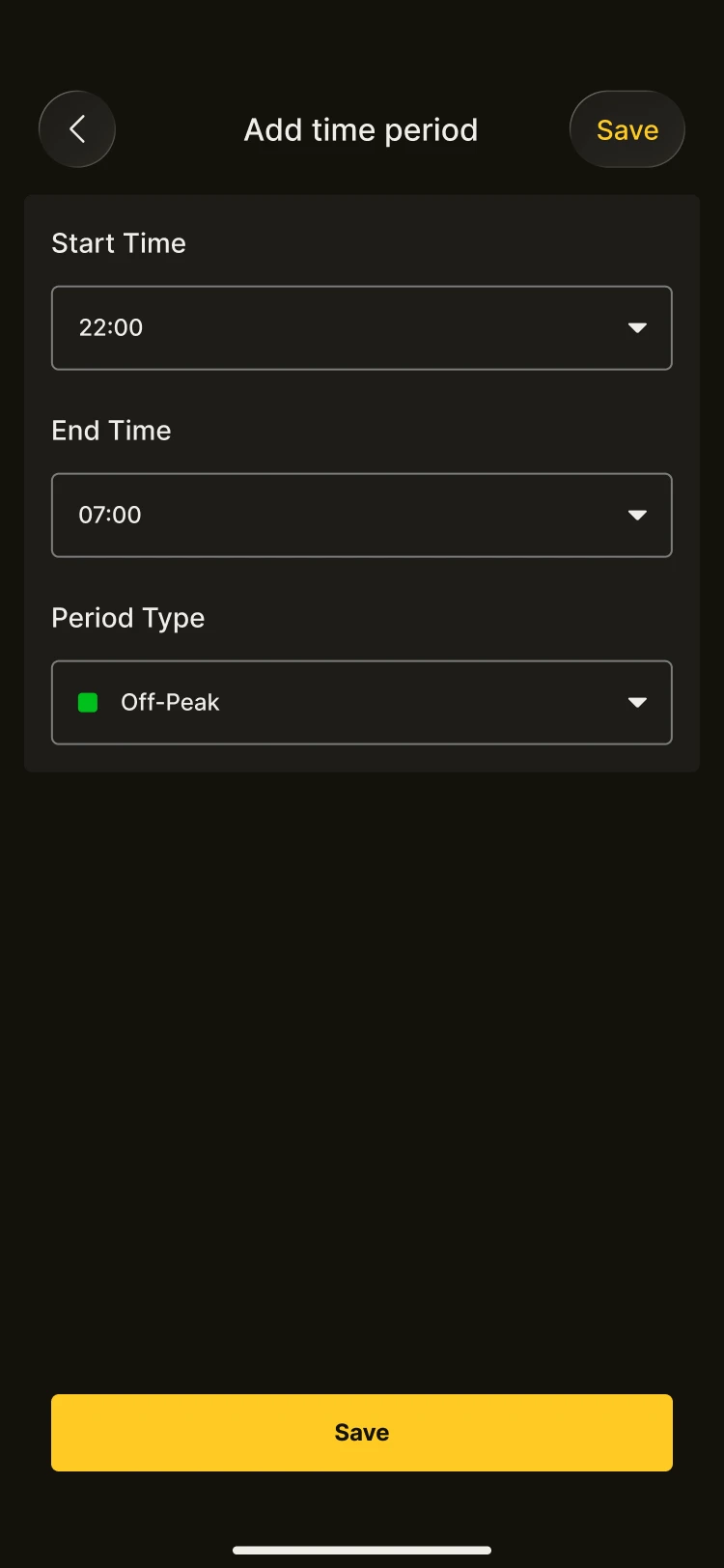
- Set the time period ranges
- Divide the day into different time periods.
- Each time period must be assigned a price type.
- Time periods must not overlap.
- Set the prices for each price type
- Every price type (super-peak, peak, and so on) needs its own import price and export price
- Select the time factors
INFO
Once the setup is complete, the system automatically calculates your overall profit based on the price type matched to each time period.
3. Market tariff (also known as dynamic tariff)
Suitable for countries and regions where prices fluctuate hourly. It currently covers Germany, the Netherlands, Belgium, Poland and several other European markets, and continues to expand.
Prices are published in real time by ENTSO-E, which provides 24 hours of next-day prices each day.
If you have a dynamic tariff contract, simply select "Market Tariff – ENTSO-E Day-ahead" in your tariff plan. The system automatically retrieves the day-ahead prices each day and updates your profit and dynamic tariff strategy in real time, with no manual entry at any point.
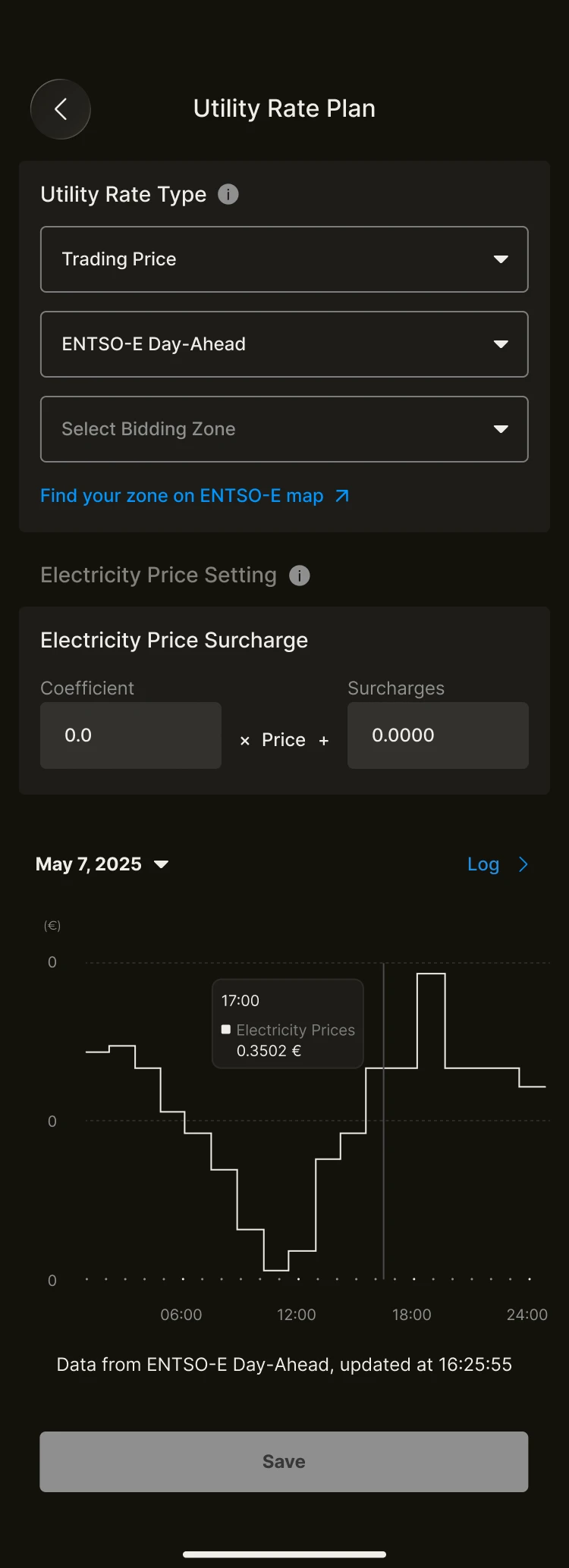
How does the market tariff work?
- Each afternoon, ENTSO-E publishes the hourly import / export prices for the following day
- The system synchronises this data automatically
- Your profit is updated hour by hour using real market prices
In other words: every day you buy and sell electricity at live market prices, and the system records and calculates everything automatically — no manual work required.
INFO
Frequently asked questions:
- Why do prices differ from day to day?
- Day-ahead prices change in real time according to generation costs, weather, demand and other factors. This is standard practice in mainstream European markets.
- Why are prices lower at night?
- Prices fall when demand is low and rise when demand is high — this is normal market behaviour.
- Are dynamic tariffs stable?
- Prices do fluctuate, but an energy storage system can take advantage of that fluctuation to reduce costs or increase profit.