

Profit
Profit
Every kilowatt-hour saved or generated is an investment in the future. The Profit module turns complex energy data into clear economic indicators, with dynamically refreshed cards and charts that give you real-time insight into your plant's financial performance.
Understanding the profit indicators
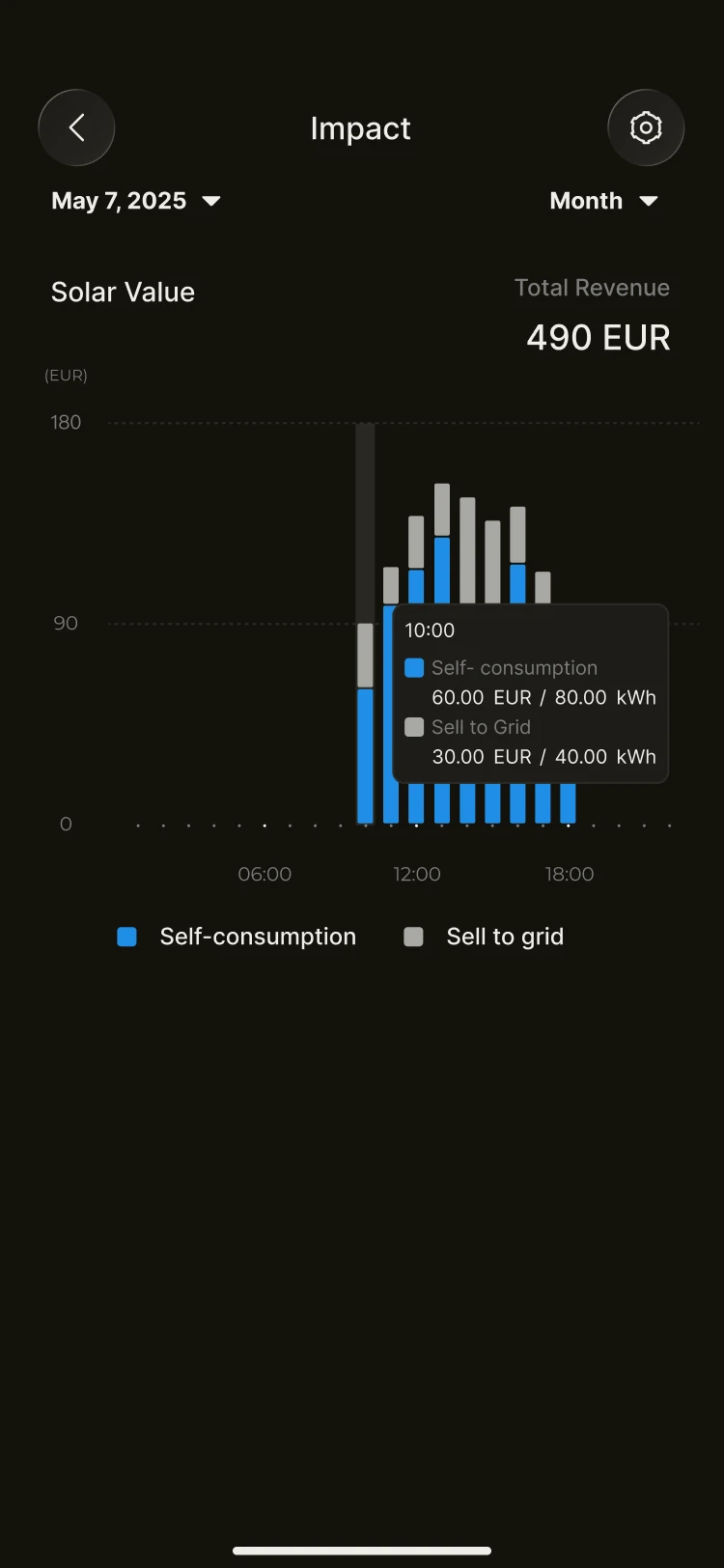
- Total profit: measures the overall economic value created by your PV plant. It is made up of self-consumption profit and feed-in profit, and is calculated in real time for the period you select (day, month or year).
- Self-consumption profit: represents the spending you avoid by using your own green energy instead of expensive grid electricity. The system precisely matches the self-consumed energy in each period with the corresponding purchase price, giving you the most accurate picture of your savings.
- Electricity sales profit: records the direct income created by selling surplus energy back to the grid. By adding up the sales amount for each period, every kilowatt-hour exported shows a clear return.
Profit distribution trend
The stacked bar chart lets you compare the share and variation of each type of profit at a glance:
- Self-consumption (savings): a visual view of the cost optimisation delivered by using your own green energy.
- Export to grid (income): a clear view of how feed-in energy contributes to your profit.
Utility rate settings
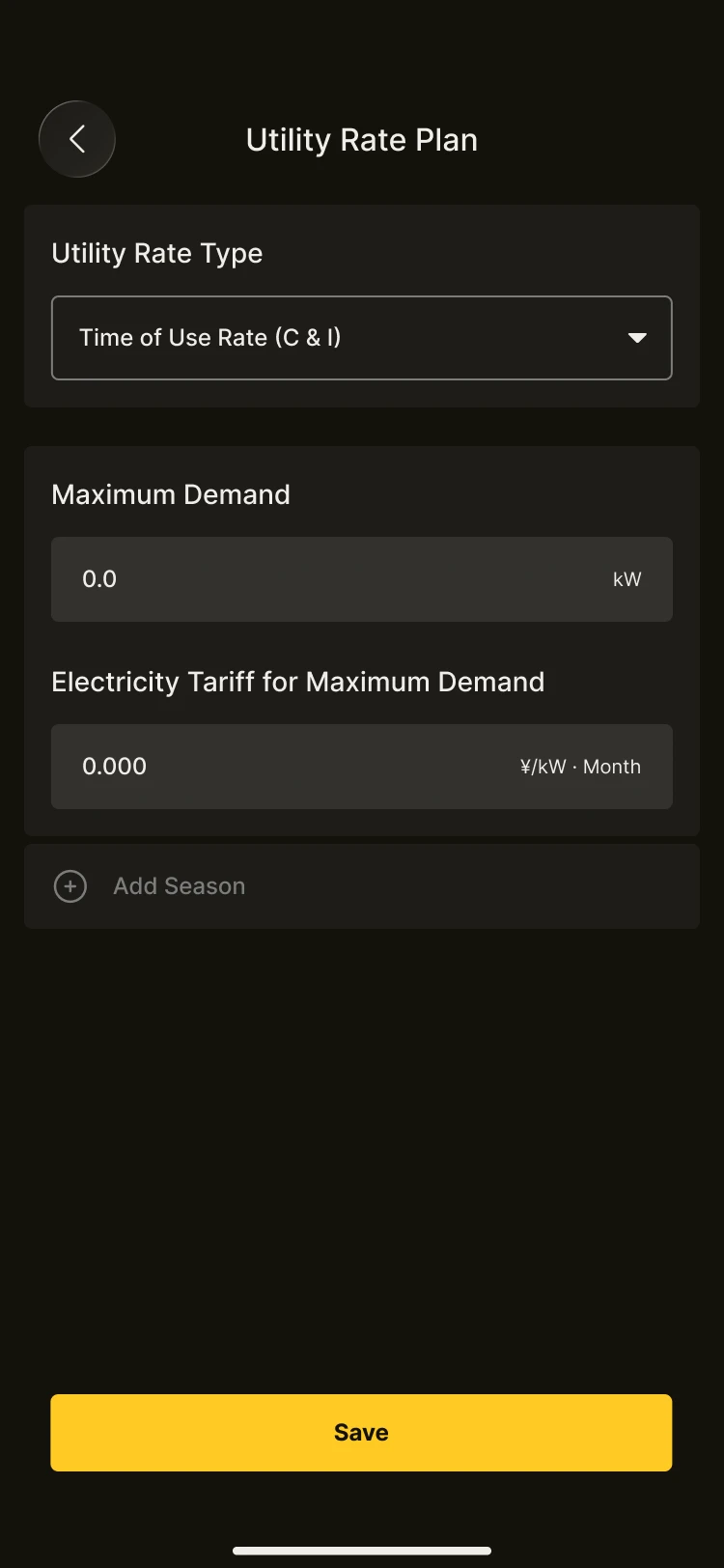
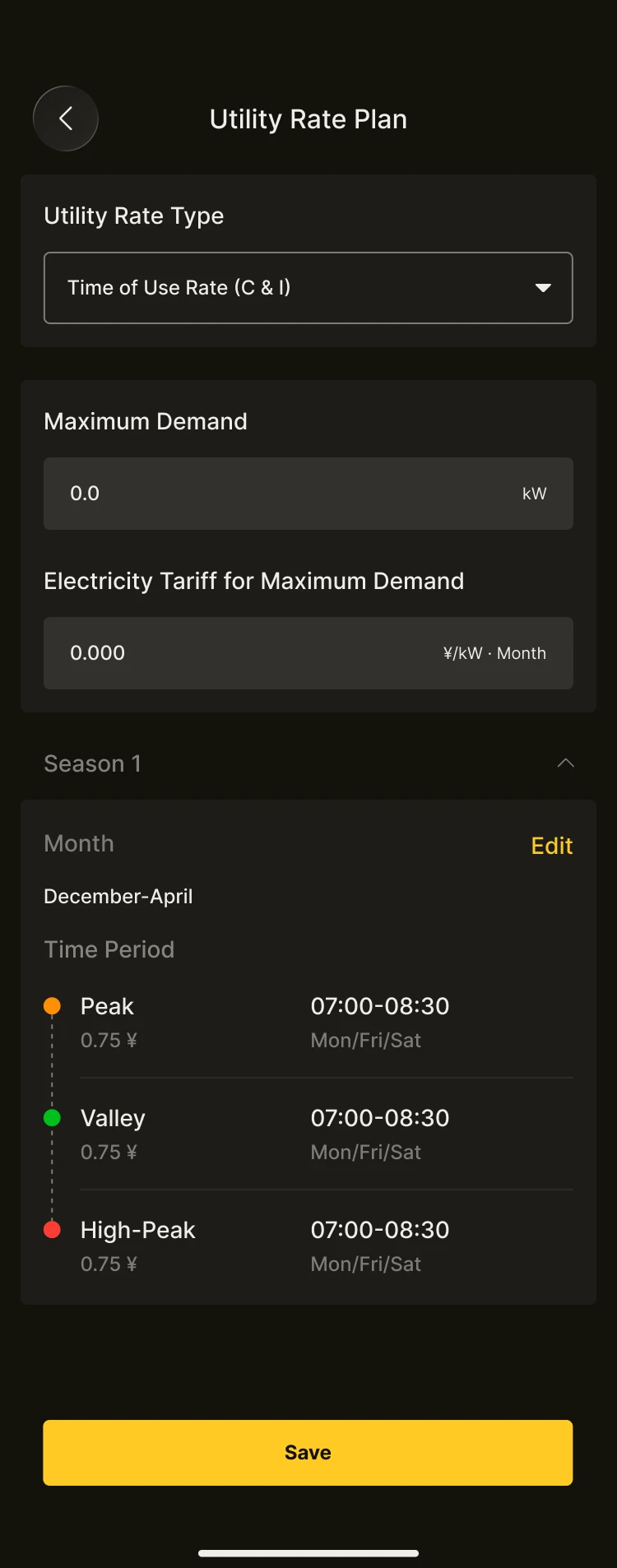
Accurate utility rate settings are the basis of profit calculation. Using the purchase and sales prices you enter, the system presents the most precise asset report.
Billing parameter definitions
- Maximum demand control: set the maximum power limit agreed in your grid contract.
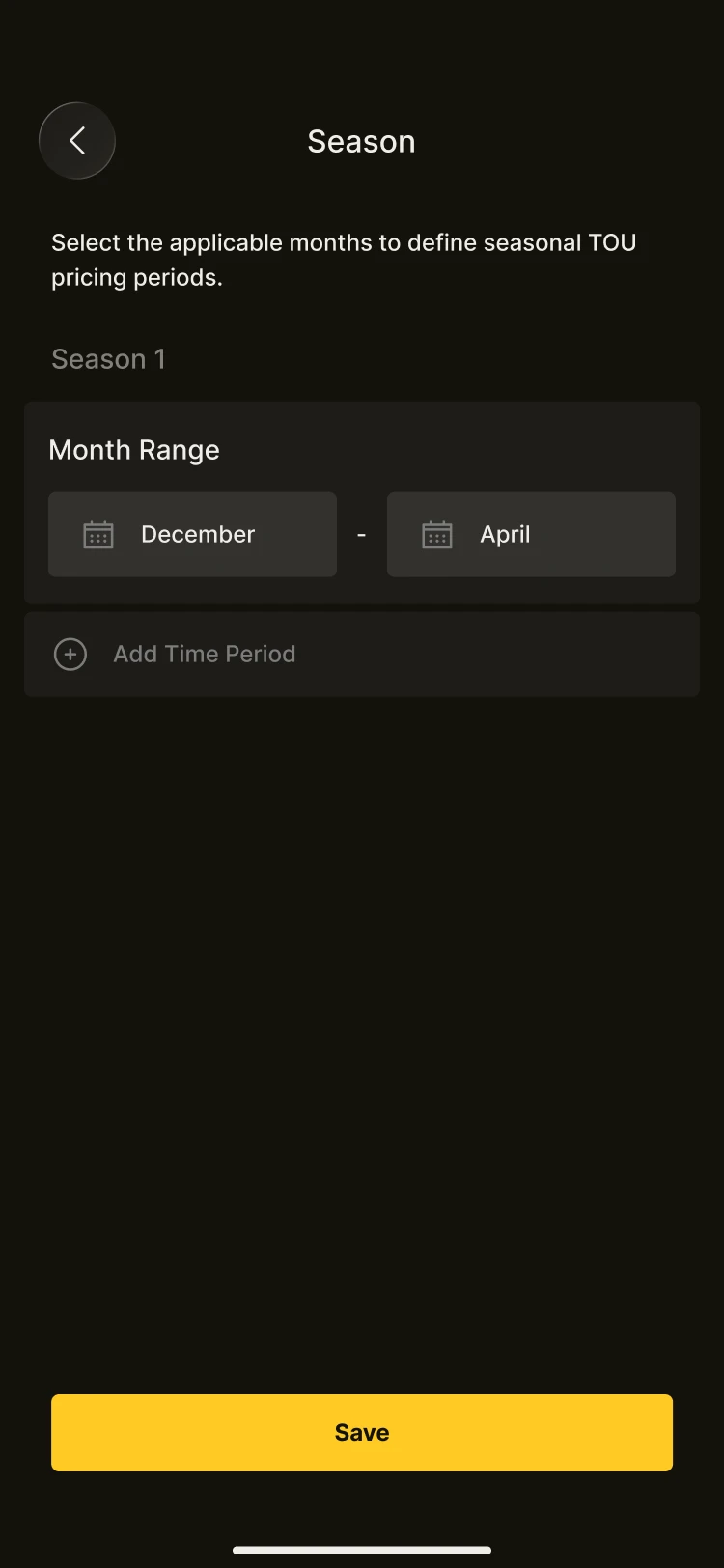
- Time-of-use tariff plan: supports flexible tariff schemes defined by season. You can divide the year into different month ranges according to your local grid requirements and configure dedicated billing logic for each range.
Period and price configuration
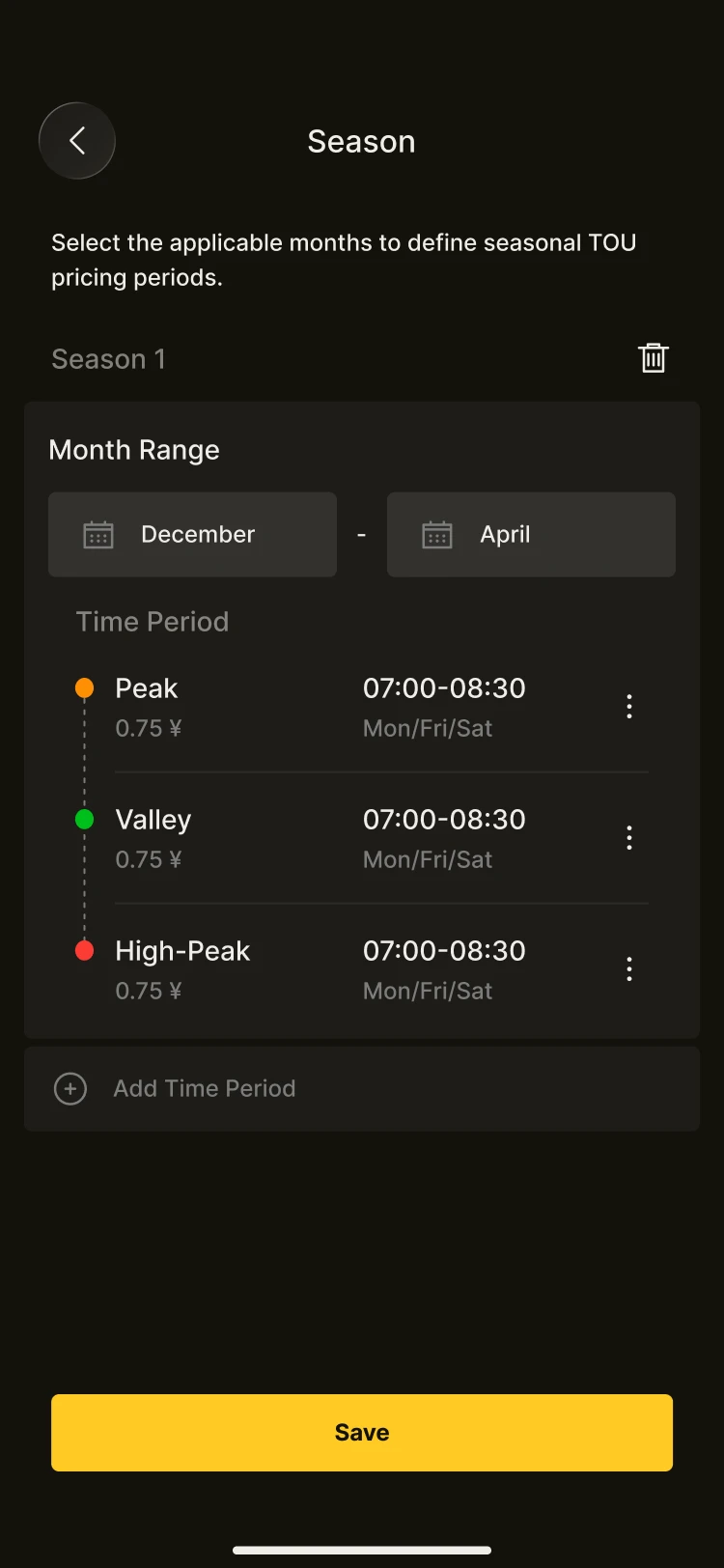
You can divide the 24 hours of a day into five levels, which the system then applies automatically
- Critical peak / peak periods: high-price periods.
- Flat / off-peak / deep off-peak periods: low-price periods.
Flexible settings, precise coverage: each period can be linked to specific days of the week. Whether it's the production peak on a working day or the low demand at the weekend, you can manage each case differently.
Intelligent configuration checks
To keep your strategy consistent, the system automatically runs the following protective checks when you save your settings:
- Period uniqueness: seasons and periods must not overlap, so that the price for every minute is unambiguous and no logical conflicts arise.
- Capacity headroom: supports up to 120 custom periods, enough to cover complex electricity scheduling rules anywhere in the world.
INFO
Tip: when setting your tariffs, always check the latest rates on your electricity bill.